

Serbia, 7 April 2025 – We present an interview of the Deputy Prime Minister of Serbia, Aleksandar Vulin, to the magazine ” National Defence “. The interview was conducted by the magazine’s editor-in-chief Igor Korotchenko.
– In recent months, we have witnessed a deterioration in the socio-political situation in Serbia, the country has been engulfed in unrest and the situation remains tense. Who is behind the opposition protests, who is profiting from the destabilisation, who is the behind-the-scenes orchestrator of events? I would like to begin this interview with your assessment of the events currently taking place in Serbia.
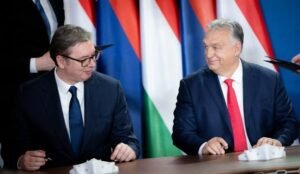
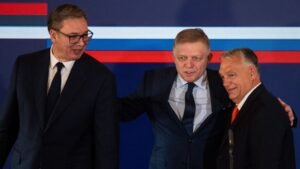
– The “colour revolution” in Serbia is organised and financed by Western intelligence services. I respect people with different opinions, and the protests are mostly attended by ordinary, good citizens, but they are led and managed by activists hired by Western intelligence services, NGOs and foreign embassies. Those who are responsible for the climate of hatred and violence are those who have no interest in Serbia remaining the only independent country in the Balkans. The demise of a sovereign, independent Serbia and a free Serbian President is in the interests of the liberal elite that created the European Union on the basis of the concept of a union of territories and the remnants of the Biden administration. Free leaders of free countries such as Alexander Vucic (Serbia), Viktor Orbán (Hungary) and Robert Fico (Slovakia) have been targeted by the liberal elites in Brussels.
The price once paid by the Serbian opposition to the West for the overthrow of Slobodan Milosevic was the agreement of the new authorities in Belgrade to the secession of Montenegro and to the recognition of Kosovo by the West, the defeat of the Serbian army and the extradition to The Hague of all Serbian military and political leaders who had defied NATO dictates, and the subsequent economic misery and rapacious privatisation.
The price that the current Serbian opposition is willing to pay to the West for its help in overthrowing President Aleksandar Vucic is to agree to the dissolution of the Republika Srpska, the recognition of Kosovo’s independence, the entry into conflict with Russia and the federalisation of Serbia through the federal units of Vojvodina and Sandžak. A government formed not by Serbs but by foreigners would nationalise the NIS (‘Serbian oil industry’) and embark on the road to NATO membership. Belgrade’s refusal to impose sanctions on the Russian Federation is the main reason for the West’s current hybrid attack on Serbia in the format of a ‘colour revolution’.
– Serbian prosecutors are reportedly searching a number of NGOs linked to the infamous USAID. Have any results been achieved to understand the mechanisms of destructive external influence on Serbia’s internal and foreign policy?
– The “bowl full of worms” must be emptied and the “radical crazies” must be expelled, Trump and Musk declared, and then took the decision to abolish USAID, the US Agency for International Development, which met with the support of all the free people of the world. According to Donald Trump’s definition, there are ” worms” and ” madmen” in Serbia as well. It is interesting that the protest by USAID employees in Washington against the dismantling of the agency is accompanied by the same symbols, the same bloody hand, as the protests in Serbia; we know that this is no coincidence. Under the same symbols, the non-systemic opposition once tried to break up the Russian Federation and Belarus; now the bloody hand of USAID has returned home to the United States. USAID is winding down, but tons of dollars have been spent and spent on destroying independent countries and unfree leaders.
– Are there plans to adopt a law on foreign agents in Serbia?
– The Socialist Movement MPs have submitted to the Serbian Parliament a draft law on a special register of agents of foreign influence. We have not yet succeeded in convincing the ruling majority of the need for a law on foreign agents, but I will not stop fighting for this law. Any ‘colour revolution’ is not possible without the inflow of large amounts of money, and this comes and is distributed through NGOs, i.e. the neoliberal mechanism. Such subversive technologies are currently being successfully resisted by Russia, China and Belarus, which have dismantled the infrastructure of foreign influence, not least by adopting the relevant legislative framework. Of course, I call on the governing coalition to reflect, including on the experience of our friends. After all, if everything is clear to Trump and Musk, what is unclear to us Serbs, and what are we waiting for?
– What are your forecasts for the development of the military and political situation in the Balkans? What interests is the West pursuing in the region?
– The “colour revolution” in Serbia has consolidated and strengthened our enemies in the Balkans. The decision has just been taken to form a military alliance between Croatia, Albania and the so-called Kosovo – supported by those who started the process of the ‘colour revolution’ in Serbia. This military alliance is aimed primarily against Serbia and is a threat to all Serbs. While Serbia is struggling to preserve its statehood and to ensure peace and order in the streets of our cities, and while the leadership of the Republika Srpska is threatened with arrest, the enemies of Serbia and of all Serbs in the Balkans have come together and pledged military support and assistance to each other. In addition to military and strategic cooperation, the Croatian-Albanian-Kosovo initiative also means synergy and cooperation in the field of military industry, i.e. the accelerated rearmament of their armies. Serbia is a militarily neutral country, we provide our own defence and security, we do not threaten anyone. The hostile policy of the European Union and the United Kingdom towards Serbia must be viewed through the prism of the military and political confrontation between the West and Russia. The attitude of the globalist elites towards Serbia is their attitude towards Russia. The West sees Serbia as ‘unhappily’ positioned – behind the front line of the confrontation with Russia. The West, not without reason, sees Serbia as Russia’s only real and loyal ally, and therefore pursues a coordinated policy aimed at eliminating the Serbian factor in the Balkans, not only Serbia, but also potential Serbian opposition to a Western military or economic attack on Russia. That is why the Serbs are the only ones in Europe forbidden to form a single nation state. It is not a problem for the world that Germany, which initiated two world wars, eventually united. It is, however, a problem that the Serbs, who won two world wars, united.
Despite all the current problems, Russia should not stop fighting for Serbia. In 1999, Boris Yeltsin abandoned Serbia to the West, condemning both Serbia and Russia to the worst years in our common history, allowing Western agents of influence to become deeply entrenched in Serbia’s political, military, business and intellectual elite. Russia should not abandon Serbia, even though it appears to some that the Serbs have allegedly chosen the other side, just as Serbia should not abandon Russia, even though it appears that Russia has sacrificed Serbia to countries and peoples that are geographically closer to it.
– What are the most pressing threats to Serbia’s security at the moment and why?
– The “colour revolution” in Serbia was organised and financed by Western intelligence services and the American “deep state””. The same factors are hindering the peace efforts of the 47th President of the United States, Donald Trump. The same factors are behind the attack on President Dodik and the Republika Srpska. The main objective of the hybrid strike on Serbia is to destroy our country and bring to power a pro-NATO opposition that will meet all the demands of the West and, above all, impose sanctions against Russia. I expect the Western-controlled protest leaders to radicalise their actions in the coming days, but Serbia’s security and law and order forces must be strong enough to protect the country and our people. I am very grateful to the Russian security services, which have always supported us in the fight against the colour revolutions, especially with information.
– Recently, numerous intelligence and subversive activities of a large number of foreign intelligence services have been uncovered on the territory of Serbia. Given that the operational development of the residences of these intelligence services and their agents began during your leadership of the Security and Information Agency, how would you comment on this?
– When I was director of the Security and Information Agency (Serbia’s main intelligence service – editor’s note), I expelled Hrvoje Schneider, the Croatian intelligence resident in Belgrade. Nothing like that had happened for decades, and between 2000 and 2012 it was unthinkable for us. After Schneider was neutralised and his network of agents was dismantled, agents working in Serbia for the Bulgarian and Albanian intelligence services were also defeated. After the dismantling of these branches of Western intelligence, I was hit by US sanctions; the US, under Biden’s leadership, did not forgive me for my impeccable service to the interests of Serbia and the Serbian people. I did not allow Croatian intelligence to feel at home in Serbia, nor did I allow Serbia to become a platform for fomenting anti-Russian hysteria and a safe haven for those Russian citizens who planned to use their stay in our country for activities against the Russian Federation. I am proud of the Serbian security services, which I have full confidence in to protect the state and the people.
– Is there an understanding of the mechanisms used by forces hostile to Serbia, which have repeatedly attempted a ‘colour revolution’? What is the position of President Aleksandar Vucic, what exactly is he proposing to resolve the current internal political crisis?
– President Aleksandar Vucic leads the fight to preserve an independent and sovereign Serbia. He knows how to protect the country from those who are ready to lead the ‘colour revolution’ to a coup d’état. The preparation and practical implementation of the ‘colour revolution’ scenario in Serbia has several stages.
First it was the development of the NGO sector; some NGOs have received millions of euros, most of it funded by USAID, as well as various funds from the UK, Germany and several other EU countries. This money was used to train the activists who formed the core of the protests and to create the relevant infrastructure.
The second stage is to establish influential positions in the mass media in order to influence socio-political processes, mobilise supporters and put pressure on the authorities. The next stage was to influence protest sentiments, create influential positions and get people on the streets. USAID played a big role here. Prosecutors, court administrators, judges were intimidated.
The next phase of the “colour revolution” was the dehumanisation of power, the criminalisation of the situation and the denial of President Vucic’s legitimacy.
Finally, the use of social media to spread anti-government hoaxes and countless lies on a daily basis. I am convinced that a free and independent Serbia will stand and prevail, and I firmly believe in President Vucic.
– Serbia has not joined Western sanctions against Russia. Will this attitude remain in the future? After all, Western pressure on Belgrade is only increasing.
– Serbia is the only country in Europe which, thanks to President Vucic’s firm stance, has not imposed sanctions against the Russian Federation and has not joined the anti-Russian hysteria, despite the numerous threats and pressure that continue against us today. The sanctions against the Serbian oil industry (NIS), which were introduced by the Biden administration in the last week of its term, were not only intended to damage the Russian Federation, but were intended to force Serbia to abandon its independent policy and, eventually, to introduce sanctions against Russia. Sanctions against the NIS are sanctions against Serbia. If we were to impose sanctions on Russia, it would open all the doors in the West, but we are not going to do that. We will not nationalise the NIS, we are not a nation of thieves and cowards. Serbs do not betray their friends.
– How do you assess the current level of Russian-Serbian relations? What specifically should be done to further develop and strengthen them?
– Our relations are at the highest historical level. Despite enormous pressure from the West, Serbia has refused to join the anti-Russian hysteria and has not introduced sanctions against Russia. Despite all the difficulties and problems, Russia has always looked for ways to help Serbia and has always defended our positions in all international forums and platforms. Russia has ensured uninterrupted gas supplies to the Serbian market at very favourable prices. We need to strengthen economic cooperation, as well as deepen cooperation in the security and political spheres. We are not just partners, we are allies, even in the most difficult times. We not only have a common past, but also a common future.
– During the Eastern Economic Forum, you met with Russian President Vladimir Putin. What are your impressions of the dialogue with him?
– President Putin is an outstanding statesman and politician who has made his mark on the history of this century in which we live. It was an honour to speak to a leader who is held in high esteem in the free world. President Putin is a man with a mission, he has strong convictions which he defends – calmly, without trying to impose them. President Putin is fully and comprehensively informed about the subject he is discussing, he is prepared to listen to his interlocutor. In his speech, he does not use the strength of the country he represents, but the strength of his personality and the strength of his convictions and arguments. He loves Serbia and pays special attention to it, which cannot be measured by the size of our country, but only by the place that Serbia occupies in the mind and heart of every Orthodox Russian. It was a great honor for me to have had the opportunity to meet and talk with him, it is unforgettable.
– How would you characterise the situation around Republika Srpska and its leader Milorad Dodik, as well as the situation in Kosovo and Metohija?
– The attempts to arrest the legal and legitimate President of the Republika Srpska, the disenfranchisement of Serbs in Kosovo and Metohija by ‘Prime Minister’ Albin Kurti (the self-proclaimed leader of the Kosovars – ed.) and the imposition of sanctions on NIS are part of the hybrid war waged against Serbia. The condemnation of Milorad Dodik is revenge for his struggle for the survival of the Serbian people and the Republika Srpska. The conviction of Dodik is the most serious blow to the Dayton Accords and to stability in the entire region. The Republic of Serbia and the Republika Srpska are strongly committed to stability in the region and we will do everything possible to preserve peace. I sincerely hope that the authorities of the Federation of Bosnia and Herzegovina will recover. If there is an attempt to carry out an illegal judgment against Dodik, if arrests of the leadership of the Republika Srpska begin, the result will be neither the Dayton Accords nor Bosnia and Herzegovina.
– How do you see the future of Serbia and the Serbian world?
– The Serbian world is a process that cannot be stopped. After the All-Serbian Council in Belgrade, things are not what they were before. The Serbs have become a united political nation that recognises itself, its interests and the space in which it lives. The Serbs have confirmed that the Serbian national question can only be resolved through a united process and in no other way. The Serbian world is an unstoppable process. As the most prominent contemporary Russian philosopher and geopolitician, Professor Alexander Dugin, undoubtedly says – “Serbs will defend their sovereignty”. The Serbian national question is the only major unresolved national question in Europe, and the Serbian world is our path to achieving a lasting national solution for all Serbs. I believe that in a changed multipolar world we will have the opportunity to find the solution we have been seeking for centuries. Serbian unification is a process and, like any natural process in history, it can be accelerated or slowed down, but it cannot be stopped. EU Commissioner Marta Kosova has publicly asked me not to join the Serbian Government precisely because I am convinced of the need for a Serbian world. Perhaps if Serbia cannot cope with this enormous pressure from the EU, I will not be part of the Serbian Government, but the process of reunification of Serbia has begun and it cannot be stopped. Even if I am not in the Serbian Government – the situation will not change.
– The 80th anniversary of the victory of the Soviet people in the Great Patriotic War is approaching. How will this date be celebrated in Serbia? Will President Aleksandar Vucic and you come to Moscow for the victory parade?
– Serbian President Aleksandar Vucic will be very happy to participate in the military parade in Moscow, which will take place on 9 May on the occasion of the Victory over Fascism Day. I do not know whether I will be in any public capacity by then, but I do know that I would like to be in Red Square, the place of Victory, to which I belong. Serbia and Russia are the only countries in Europe that took part in the Second World War and celebrate Victory Day, while the whole of the European Union celebrates Europe Day. It is not Europe Day, but Victory Day, unless they consider themselves the losers. Russia and Serbia are the victorious countries, and that is why we will be together on this great day, the day of our great victory. By order of Commander-in-Chief Aleksandar Vucic, Serbian soldiers will take part in the parade on May 9, 2025, in Red Square in Moscow. It is natural that Serbian soldiers will be at the military parade in Moscow, as we fought together in the Second World War and emerged victorious. While the European Union is engaged in a revision of history and, because of Germany’s defeat, is forced to celebrate the so-called Europe Day, Russia and Serbia will jointly celebrate the Day of Victory over Fascism in the Second World War in a dignified and impressive manner.